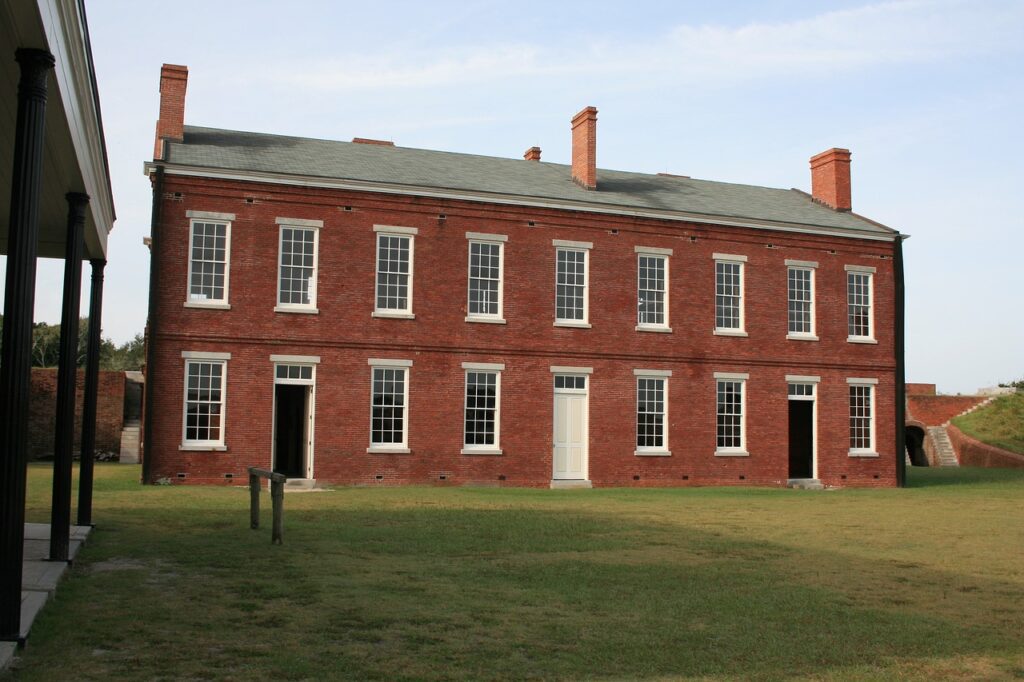
A Fascinating History of Coastal Defense on Florida’s East Coast
Nestled on the picturesque Amelia Island along Florida’s east coast, Fort Clinch stands as a silent sentinel, bearing witness to a rich and diverse history.
Constructed with multiple purposes in mind, the fort has become a symbol of coastal defense and a testament to the strategic importance of the region.
Throughout the years, it has witnessed conflicts, technological advancements, and periods of peace.
This article explores the captivating history behind the construction and significance of Fort Clinch, shedding light on the multifaceted reasons behind its establishment.
Strategic Positioning:
One of the primary reasons for Fort Clinch’s construction was its strategic location.
The island, known for its proximity to major shipping channels and its natural deep-water harbour, presented an ideal site for fortification.
The presence of the fort would ensure the protection of nearby waterways, including the entrance to the St. Marys River and the Cumberland Sound.
Defense during the Seminole Wars:
Fort Clinch played a crucial role during the Seminole Wars (1817-1858), a series of conflicts between the United States government and the Seminole Native American tribe.
With its location near the border of Spanish Florida, the fort provided a defensive stronghold against attacks and served as a base for military operations.
Its construction aimed to maintain control over the region and safeguard American interests.
The Threat of Foreign Invasion:
During the mid-19th century, tensions were high among world powers, and fears of foreign invasion loomed over the United States.
As part of a broader coastal defense strategy, Fort Clinch served as a deterrent against potential attacks by foreign navies.
The fort’s massive walls and artillery provided formidable protection against hostile forces.
The Civil War and Confederate Occupation:
The outbreak of the American Civil War in 1861 brought Fort Clinch to the forefront of military activity once again.
Initially occupied by Confederate forces, the fort was soon seized by Union troops in 1862.
Its strategic position allowed Union forces to effectively blockade Confederate supply lines, cutting off vital resources to the South.
Adaptation and Modernization:
Following the Civil War, Fort Clinch underwent a series of modifications to keep up with evolving military technology.
The advent of rifled artillery and ironclad warships rendered traditional masonry forts vulnerable.
To counter these advancements, the fort underwent substantial upgrades, including the installation of rifled cannons and improvements to the defensive earthworks.
Fort Clinch State Park:
In the early 20th century, Fort Clinch transitioned from active military use to a state park.
Recognizing the historical significance of the fort, the State of Florida acquired the property and transformed it into Fort Clinch State Park in 1935.
Today, the park serves as a living museum, offering visitors a glimpse into the past through interactive exhibits, guided tours, and reenactments.
Fort Clinch’s captivating history embodies the multifaceted nature of coastal defense in Florida.
From its strategic positioning and defense against indigenous tribes to its role during the Civil War and modernization efforts, the fort has witnessed a plethora of events that shaped its legacy.
Preserved as Fort Clinch State Park, this historical gem stands as a reminder of the region’s past and the importance of coastal defense in the development of the United States.