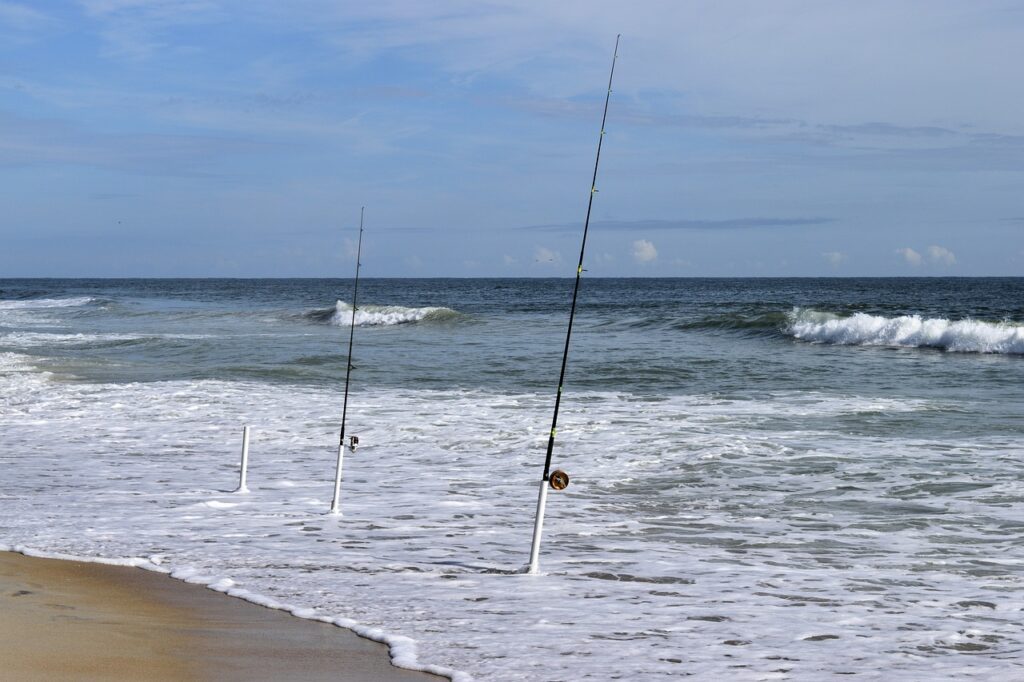
Good Day Surf Fishing
When preparing for a good day of surf fishing, the key lies in meticulous planning and strategic decisions.
Picture yourself standing on the shoreline, the waves crashing gently against the sand as you cast your line into the vast expanse of the ocean.
Imagine the thrill of feeling a tug on your rod, the anticipation of what might be at the other end.
There’s an art to mastering the techniques and nuances of surf fishing that can lead to bountiful catches, but it all starts with the right approach.
Choosing the Right Equipment
When heading out for a day of surf fishing, consider selecting the appropriate gear to enhance your fishing experience.
The first thing to consider is your fishing rod. Opt for a long, sturdy rod that can handle the rough surf and cast your bait far out into the water.
A rod between 10 to 12 feet is typically ideal for surf fishing. Pair this with a durable spinning reel that can withstand exposure to saltwater.
Next, choose the right fishing line.
A braided line is a popular choice for surf fishing due to its strength and thin diameter, allowing for longer casts.
Make sure to use a line weight that matches the species of fish you’re targeting.
Additionally, pack a variety of sinkers and weights to ensure your bait stays in the desired location despite the surf conditions.
Lastly, don’t forget about your tackle box. Include a selection of hooks, swivels, and bait options to adapt to changing fishing conditions throughout the day.
By carefully choosing your equipment, you’ll be well-prepared for a successful day of surf fishing.
Selecting the Ideal Location
Consider scouting out potential fishing spots along the shoreline to find the ideal location for your day of surf fishing.
Look for areas where the water is deeper and the waves aren’t too rough, as these conditions tend to attract fish.
Keep an eye out for any signs of underwater structures like sandbars or troughs, as these can also be excellent spots to set up for a successful fishing session.
Additionally, pay attention to the presence of birds diving into the water, as this could indicate a baitfish school nearby, which in turn may attract larger game fish.
Rocks, jetties, and piers can also create ideal fishing locations by providing shelter for fish and creating currents that bring in food sources.
Remember to consider the accessibility of the spot, as you’ll need to transport your gear and catch back and forth.
Additionally, be mindful of any restrictions or regulations in place for fishing in that particular area.
By choosing the right location, you increase your chances of having a rewarding day of surf fishing.
Understanding Tides and Weather
To enhance your surf fishing experience, familiarize yourself with how tides and weather conditions impact fishing success.
Understanding tides is crucial because they influence the movement of fish.
During high tide, fish tend to move closer to the shore, making it easier to catch them.
On the other hand, during low tide, fish may move further away, requiring you to cast your line out deeper.
Pay attention to the tide charts specific to your fishing location to plan your outing accordingly.
Weather conditions also play a significant role in surf fishing.
Fish are often more active during overcast days or when there’s a drizzle.
Conversely, bright sunny days may result in fish being less active.
Wind direction is another important factor to consider.
A strong onshore wind can stir up the water, making it more challenging to fish, while a gentle offshore breeze can create ideal fishing conditions.
Bait and Lure Selection
Selecting the right bait and lures is crucial for maximizing your chances of catching fish while surf fishing.
When surf fishing, it’s essential to consider the type of fish you’re targeting and the conditions of the water.
For example, if you’re aiming for larger predatory fish like striped bass, using live bait such as mullet or eels can be highly effective.
On the other hand, if you’re targeting smaller fish like pompano, artificial lures like spoons or jigs might work better.
Matching the color and size of your bait or lures to the natural prey of the fish in that area can also increase your chances of success.
Additionally, varying your bait and lure selection throughout the day can help you adapt to changing conditions and fish behavior.
Remember to pack a variety of options in your tackle box so you can switch it up as needed.
By being strategic and informed in your bait and lure selection, you can increase your chances of having a successful day of surf fishing.
Tips for a Successful Catch
When aiming for a successful catch while surf fishing, paying attention to your surroundings and adapting to changing conditions can significantly improve your chances of reeling in a big catch.
Start by observing the water movement and look for areas where fish might gather, such as sandbars, troughs, or near structures like rocks or jetties.
Adjust your casting distance accordingly to reach these potential hotspots.
Additionally, keep an eye out for any signs of baitfish activity, like birds diving into the water or fish jumping.
This can indicate the presence of larger predatory fish in the area.
Vary your retrieval speed and experiment with different lures or bait presentations to see what attracts the fish on that particular day.
Don’t forget to stay flexible and willing to change your tactics if the conditions shift.
Fish are constantly on the move, so being adaptable and responsive to any changes in the environment can make a significant difference in your fishing success.
So, next time you head out for a day of surf fishing, remember to:
– Choose the right equipment.
– Pick a great location.
– Pay attention to tides and weather.
– Select the best bait and lures.
By following these tips and staying adaptable to changing conditions, you’ll be well on your way to having a successful day of surf fishing.
Good luck and tight lines!